Examining How Accumulation Structures Guide Shifts Between Reel Spinners and Hosted Table Formats via Flexible Transaction Routes on Handheld Apps
Ben Roth · May 27, 2026

Examining How Accumulation Structures Guide Shifts Between Reel Spinners and Hosted Table Formats via Flexible Transaction Routes on Handheld Apps
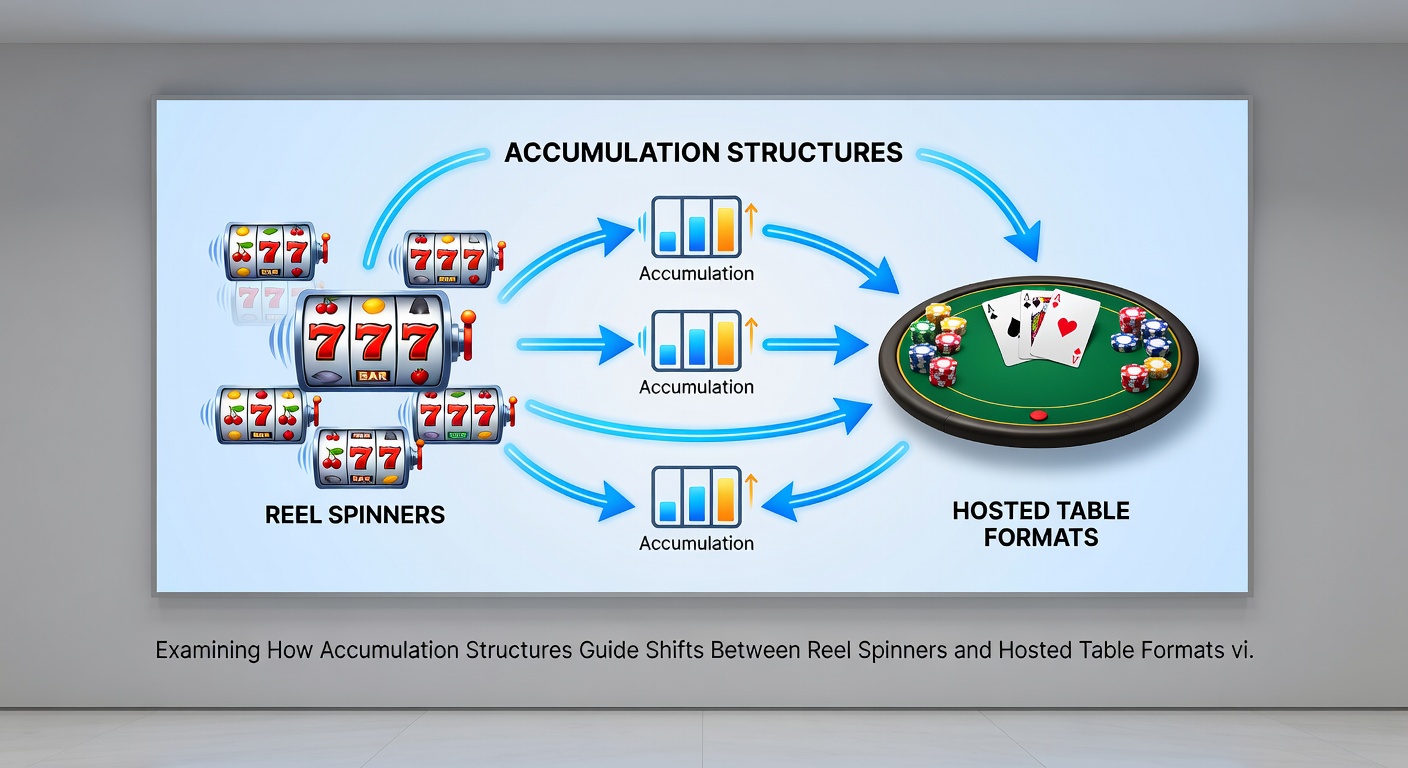
Accumulation structures in mobile gaming platforms track player progress across different game categories and create pathways that connect reel-based machines with hosted table environments through integrated transaction systems. These frameworks record points, levels, and balances that remain active when users move between formats, while flexible transaction routes handle deposits, withdrawals, and in-game transfers without requiring separate accounts for each type. Platform operators design these systems to maintain continuity so that activity on reel spinners contributes directly to eligibility or rewards available in table formats.
Core Components of Accumulation Systems
Accumulation mechanisms collect data from gameplay sessions on slots and apply those metrics toward unified player profiles that also cover table games. Points generated from reel spins accumulate in a central ledger, and operators convert portions of those points into credits or status indicators usable on live dealer tables. Transaction routes embedded in handheld applications allow instant movement of funds between game wallets, with protocols that adjust for differing bet structures and payout timelines. Data from industry reports shows that such unified ledgers reduce friction during format changes and keep session continuity intact on smartphones and tablets.
Transaction Flexibility Across Game Types
Flexible transaction routes rely on real-time synchronization between backend servers and mobile clients so that a player finishing a slot session can redirect accumulated value to a table game without logging out or re-verifying. These routes support multiple payment rails, including digital wallets and linked bank transfers, while applying consistent verification rules regardless of whether the destination is a reel spinner or a hosted table. In May 2026 platform operators reported that transaction completion times averaged under three seconds for cross-format shifts when accumulation thresholds had already been met in the player's profile. Observers note that this speed stems from pre-cleared routing tables that flag eligible balances before the user selects the next game category.
Role of Handheld App Architecture
Handheld applications house the interfaces that display current accumulation totals and present one-tap options for shifting formats while preserving those totals. Developers integrate APIs that communicate with both slot servers and table hosting systems so that balance updates appear immediately after each transaction. The architecture separates the visual game layers from the underlying accumulation engine, which means reel spinner outcomes feed the same progress tracker used by hosted tables. Researchers at academic institutions studying digital entertainment systems have documented how this separation allows operators to update individual game modules without disrupting the shared transaction and accumulation layers.
Operational Patterns Observed in 2026
Platform analytics collected through May 2026 indicate that users who reach mid-tier accumulation levels complete format shifts more frequently than those at entry levels. The patterns show that once a player crosses a defined point threshold on reel spinners, the same balance becomes available for table formats within the same app session. Operators achieve this by mapping accumulation values to a common currency unit that both game types recognize, while the transaction route layer handles any necessary rounding or conversion. Regulatory filings from multiple jurisdictions confirm that these mapped values undergo periodic audits to ensure consistency across formats.
Integration With External Data Sources
Operators sometimes link accumulation structures to external reports on player behavior released by bodies such as the American Gaming Association, which publishes aggregated figures on mobile engagement trends. These external datasets help refine threshold settings so that format-shift prompts appear at moments when accumulated balances are most likely to be used. A second source, the Australian Gambling Research Centre, supplies longitudinal studies that track how unified ledgers affect session length across different game categories on handheld devices. Platform teams incorporate such findings into algorithm updates that govern when and how transaction routes activate during cross-format movement.
Security and Compliance Layers
Security protocols wrap each transaction route so that accumulation data remains encrypted during transfers between reel spinner and table environments. Compliance modules embedded in the handheld apps check jurisdictional rules before allowing a shift, ensuring that accumulated values do not violate limits set for either game type. Automated logs record every movement, creating audit trails that regulators can review. Those logs capture timestamps, originating game category, destination format, and the exact accumulation amount transferred, all without exposing personal identifiers beyond what each jurisdiction requires.
Conclusion
Accumulation structures combined with flexible transaction routes enable handheld applications to support fluid movement between reel spinners and hosted table formats while preserving player progress. The systems rely on unified ledgers, synchronized mobile architectures, and audited routing protocols that maintain continuity across sessions. Data collected through May 2026 demonstrates measurable increases in cross-format activity once accumulation thresholds are integrated into the transaction layer. Continued refinement of these components depends on ongoing input from regulatory filings and research organizations that track mobile gaming patterns across regions.