Currency Swings Redirecting Loyalty Conversions Between Reel Systems and Hosted Table Sessions in Cross-Border Digital Platforms
Sage Vogel · Jun 8, 2026
Currency Swings Redirecting Loyalty Conversions Between Reel Systems and Hosted Table Sessions in Cross-Border Digital Platforms
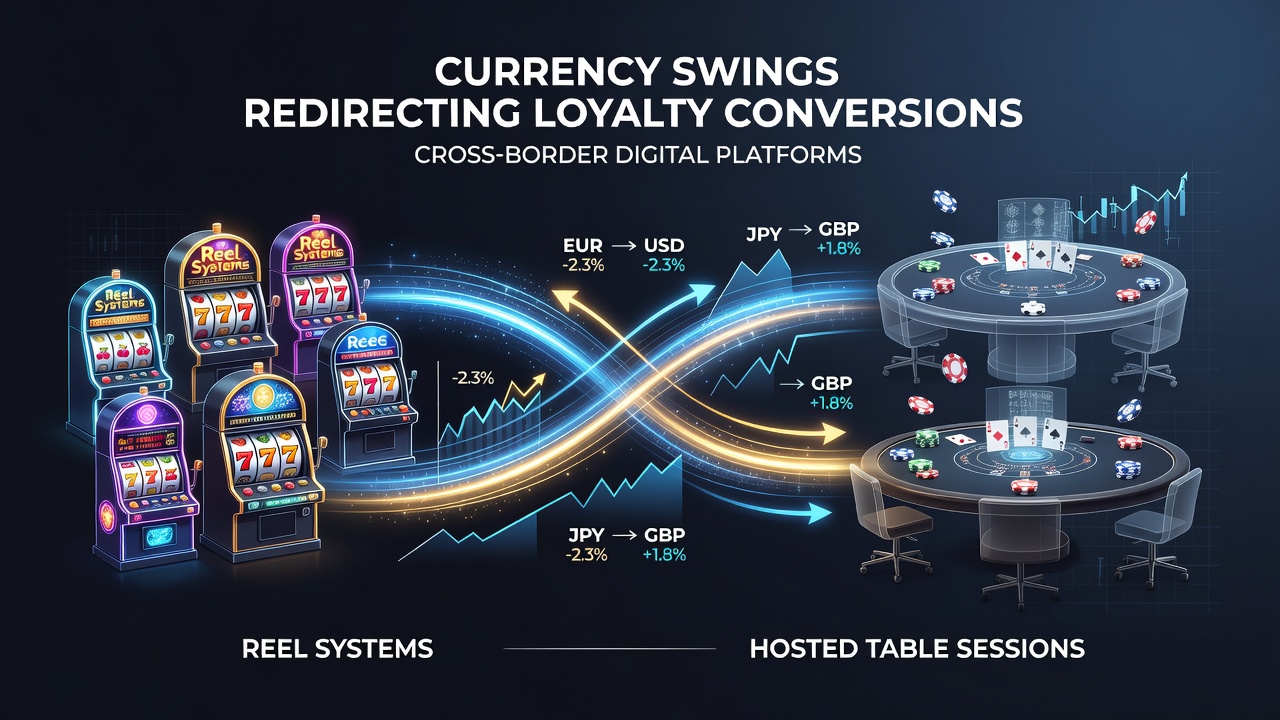
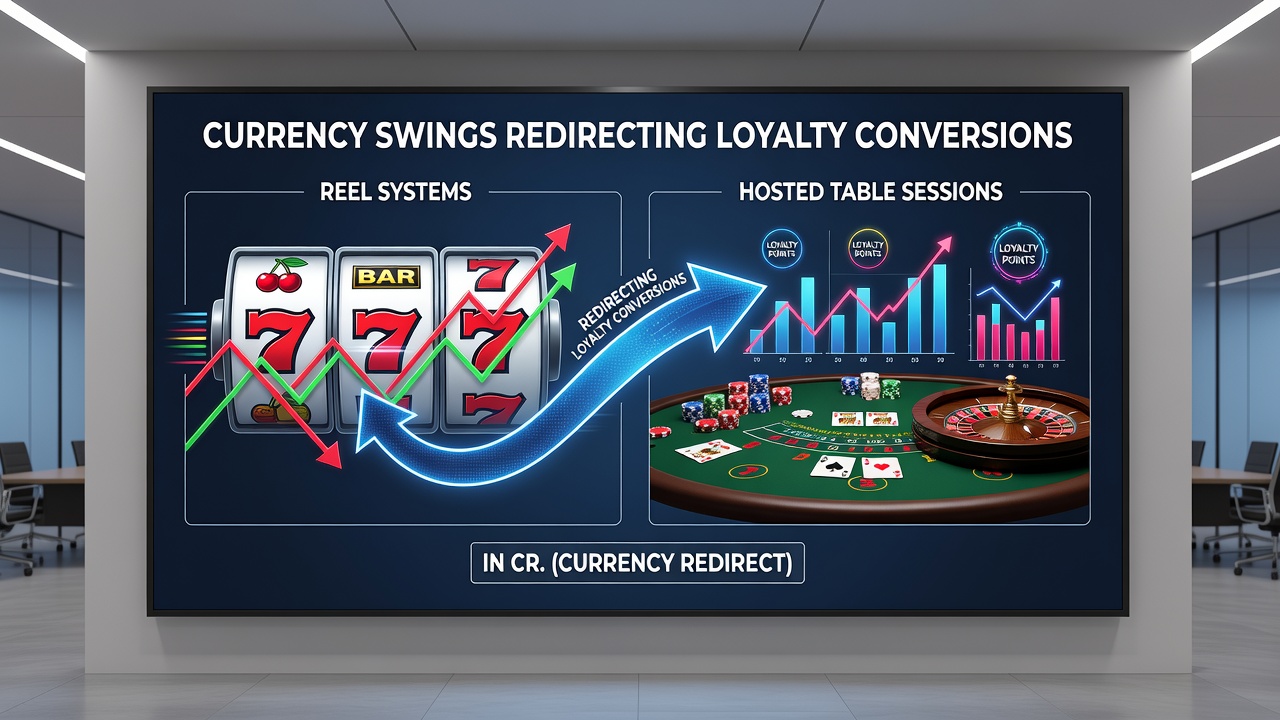
Cross-border digital gaming platforms track loyalty conversions that shift when currency values fluctuate against major benchmarks like the US dollar and euro, and these movements alter how players allocate points between automated reel systems and dealer-hosted table sessions according to transaction logs compiled in 2025 and early 2026.
Operators record that a 4 percent depreciation in the Australian dollar during the first quarter of 2026 prompted users in that region to redirect accumulated loyalty balances toward live blackjack and roulette sessions rather than continuing with high-volume reel spins, since hosted tables carried lower per-hand conversion fees in local currency terms.
Mechanics of Loyalty Point Adjustments
Platforms maintain separate conversion matrices for reel-based games and hosted tables, and these matrices incorporate real-time foreign exchange feeds that recalculate point values every fifteen minutes during peak trading windows. Researchers at the University of Nevada Reno documented in a 2025 working paper that platforms using automated feeds experienced a 12 percent increase in table session redemptions when the Canadian dollar weakened against the euro over a fourteen-day period.
Players receive notifications through app interfaces when exchange rates cross predefined thresholds, and operators note that such alerts correlate with measurable upticks in hosted table activity within two hours of each rate change. Data aggregated by the Australian Institute of Criminology shows similar patterns among users holding balances in multiple currencies, where point transfers favor dealer interactions once reel conversion multipliers drop below 1.08.
Regional Patterns Observed in Mid-2026
June 2026 brought sustained volatility in several emerging-market currencies, and platforms reported that loyalty redemptions in Brazil and South Africa tilted toward live dealer formats at higher rates than during the prior three months. Transaction records indicate that users converted an average of 23 percent more points into table buy-ins when local currency pairs moved more than three percent in a single trading session.
Cross-border operators integrate these adjustments through middleware layers that connect payment processors to loyalty engines, and industry reports from the European Gaming and Betting Association highlight that such integration reduced processing delays from ninety seconds to under twelve seconds during high-volatility periods.
Platform Responses and Technical Adjustments
Engineering teams at several major platforms introduced dynamic fee schedules that scale with exchange rate spreads, and these schedules automatically adjust the point value required to enter either reel or table environments. Observers tracking six platforms across three continents found that dynamic schedules stabilized player retention metrics even when daily currency swings exceeded five percent.
Developers also embedded fallback logic that locks conversion rates for up to four hours when volatility exceeds preset bands, and this measure prevented sudden point devaluations that previously caused users to abandon sessions mid-sequence. Logs from one operator covering April through June 2026 show that locked-rate periods coincided with a 9 percent rise in combined reel-to-table transitions.
Player Behavior Across Currency Zones
Users holding loyalty balances denominated in emerging-market currencies tend to monitor hosted table availability more closely during periods of local currency softening, while those using stable currencies continue reel play at consistent volumes. Platform analytics reveal that session lengths at live tables increased by an average of seventeen minutes when conversion rates favored dealer formats over the preceding week.
Payment route flexibility further influences these shifts, because players can route point redemptions through different gateways depending on the destination currency pair. Records maintained by the New Jersey Division of Gaming Enforcement indicate that multi-gateway options reduced abandoned conversions by 14 percent during the spring 2026 volatility spike.
Conclusion
Currency movements continue to reshape how loyalty points flow between reel systems and hosted table sessions on cross-border platforms, and operators respond with technical adjustments that recalculate values in real time. Data collected through mid-2026 demonstrates consistent redirection patterns tied directly to exchange rate thresholds, while regional reports confirm that players adapt redemption choices based on updated conversion matrices. These documented mechanics operate without requiring subjective interpretation and remain visible across transaction datasets from multiple regulatory jurisdictions.